
 Image 1 of 1
-
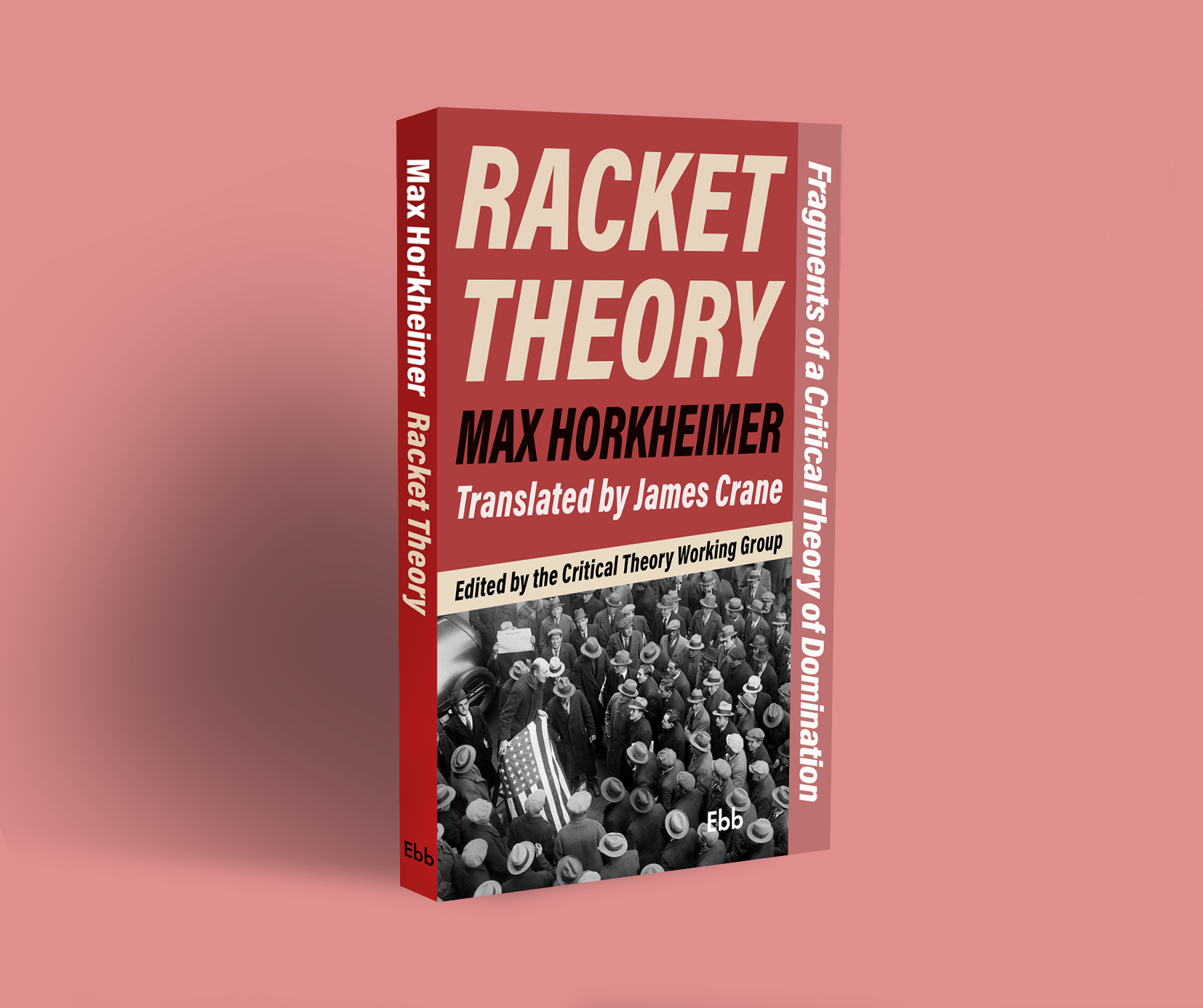
Max Horkheimer (1895-1973) was director of the Institute for Social Research, co-author of Dialectic of Enlightenment: Philosophical Fragments (1944) with Theodor W. Adorno, and author of Eclipse of Reason (1947).
-
Preface
1. Introducing Racket Theory: On the History and Themes of the Frankfurt School’s Racket Theory
Part I
2. On the Sociology of Class Relations (1943)
3. Fragments
On the Ideology of Politics Today (ca. 1942)
Rackets and Spirit (1942/44)
History of the American Labor Force (1942/44)
On the Philosophy of Law (1942/44)
Solidarity (1942/1944)
A Theory of the Criminal (1943/1944)
4. Internal Memos
LA Memo (1942)
Notes for the Program of the Book (8/30/1942)
Foreword
On the Relation Between Critical Intellectuals, the Proletariat, and the Communist Party
The Curse of Writing Today
Part II
5. Class and Rackets, by Re Tejus
6. The Economic Limits of Racketology, by Mac Parker
7. Horkheimer and Korsch: Collectivisation during the Spanish (Civil) War or The Spirit of the Anti-Racket, by Esther Planas Balduz
8. Variations: Fragmentary Theoretical Assays by Critical Theory Working Group
-
“Vilified by reactionaries as the seedbed of ‘cultural Marxism’, the Frankfurt School is condemned on the left for sidelining class and anti-imperialist struggle. This book promises to overturn this assessment.”
Ray Brassier, author of Nihil Unbound (2007)
-
December 2026
Ebb Books
220 Pages, 5×8Paperback ISBN: 9781738468713
Ebook ISBN: 9781911882008